What Is Going On
Most of the garage doors we get called on in Nixa sit on houses built between 1956 and 2010, with the bulk of that stock going up through the 1980s and 90s. That matters because a torsion spring has a service life measured in cycles, not years, and a spring installed when a house was framed in, say, 1988 is now well past due no matter how it looks. Steel fatigues. It doesn't fail because it's rusty or ugly - it fails because it's been wound and unwound tens of thousands of times, and cold makes the metal less forgiving on the last few thousand of those cycles.
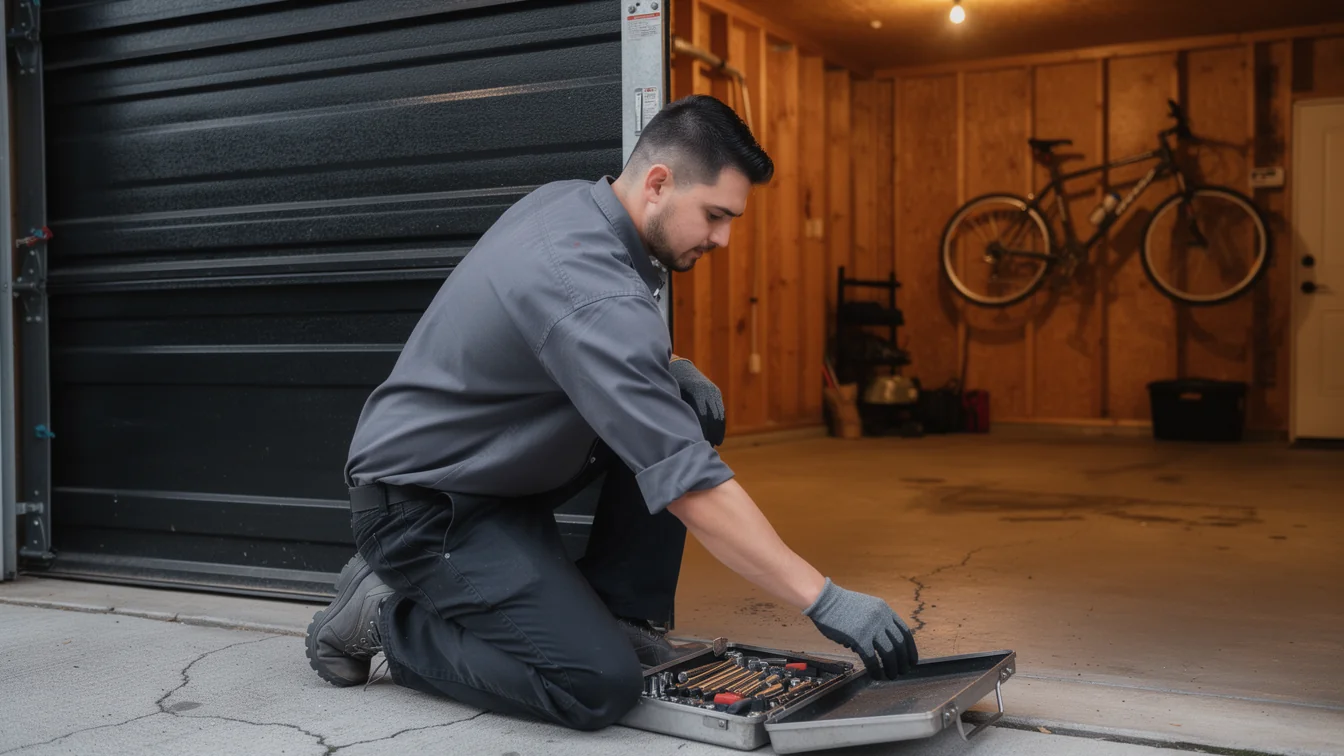
When a spring lets go, you'll hear it - a bang loud enough that people call thinking something hit the house. The door will feel like dead weight. If it's up when the spring breaks, it may come down hard and fast. If it's down, you likely won't get it up at all, not even by hand, because the spring was doing most of the lifting work the whole time you owned the door.
This isn't a Nixa-specific defect. It's the age of the housing stock meeting ordinary mechanical wear, and the timing just happens to land on a cold morning more often than people expect.
How Local Conditions Play In
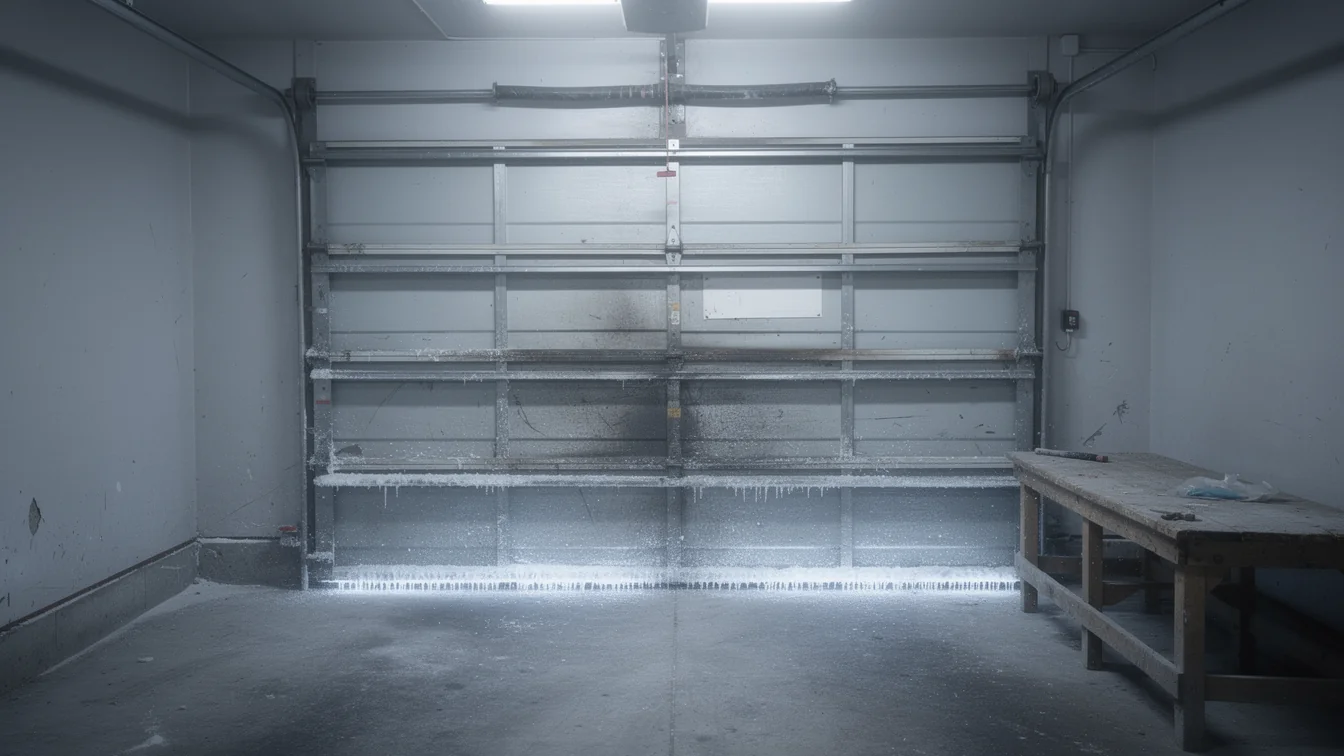
Nixa sits in a cold-moderate climate band, which means winters bring real temperature swings rather than one long freeze. That swing matters more than the cold itself. Steel contracts when it's cold, and a spring that's already fatigued from 20-30 years of cycling has less margin to absorb that contraction. It's the difference between a spring that was going to fail eventually and one that fails on a 15-degree morning instead of a mild afternoon.
Houses from the 1980s and 90s stock common across this area were mostly built with standard torsion spring setups, not the heavier-duty hardware you'd see in newer construction. That's not a flaw, just a product of when they were built. It means a lot of the springs doing work in Nixa garages right now are original or close to it, sized for the door and climate expectations of that era.
Cold doesn't cause the break by itself. It's the last straw on a spring that was already near the end of its cycle count, and that's why we see a jump in calls when the weather turns.
When to Get Help
If you hear a bang and the door won't move, stop trying to force it by hand or with the opener. A torsion spring under tension that's already failed can still have stored energy in the other spring on a two-spring setup, and that's not something to work around on your own.
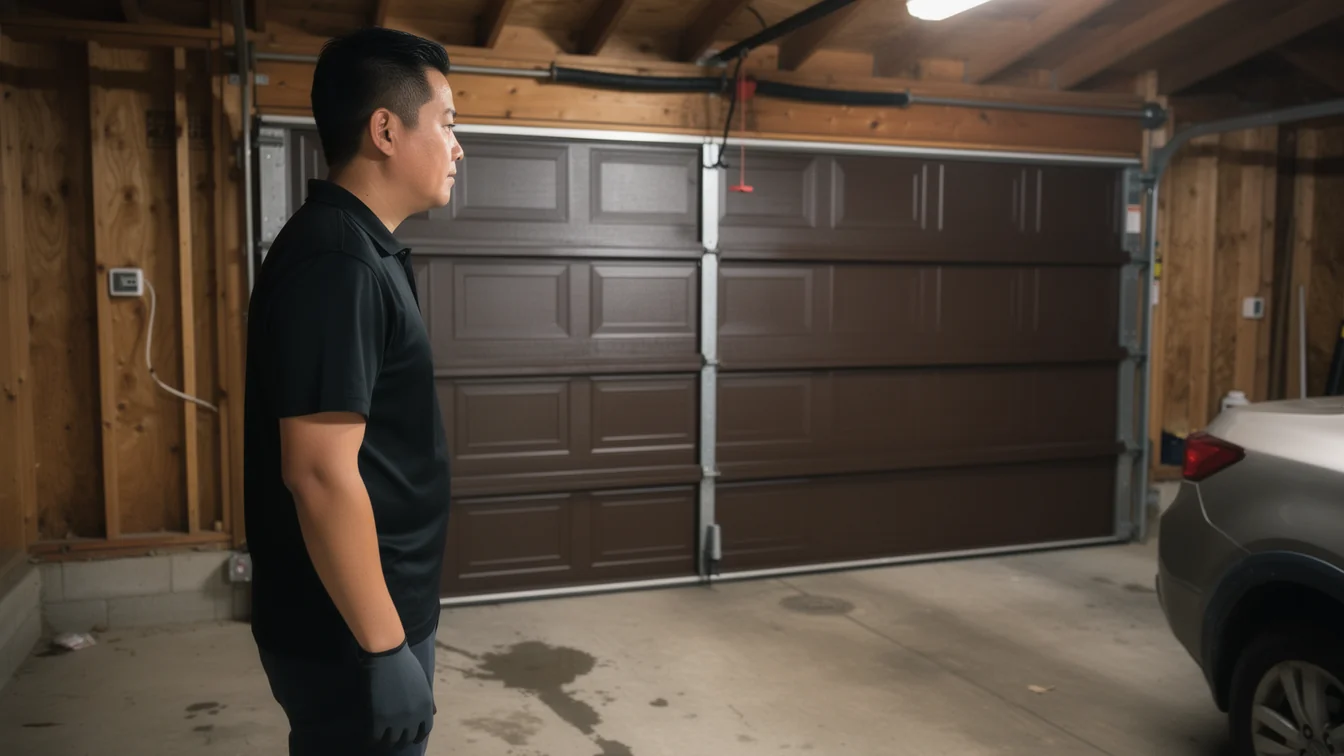
If the door is noticeably harder to lift than it used to be, or if you notice a gap in the coil when you look at the spring above the door, that's worth a call before it breaks outright rather than after. Catching a tired spring before it snaps usually means a simpler job.
One honest limit here: if your door is original to a house built in the earlier part of that 1956-2010 window, replacing a single spring sometimes just buys a few months before the opener, rollers, or cables need attention too. We'll tell you straight if that's where you're at instead of selling you a spring job that's going to turn into three more calls.
Season by Season
Late fall through winter is when we see the most spring failures, tied directly to the cold-moderate swings this area gets rather than to any one deep freeze. A spring that made it through ten summers can go on the first hard cold snap of November.
Spring and summer tend to be quieter for sudden breaks, but that's a good window for the inspection kind of call - checking a spring that's showing wear before the weather turns again.
Across the wider service area, with around 20,271 households and roughly 11,111 owner-occupied houses, and a median household income near $60,670, a lot of homeowners are weighing a spring replacement against other repairs on an aging door system. We work throughout this area, including out toward Battlefield, Highlandville, and Clever, and the same cold-weather pattern on aging springs holds true in those communities too.
Talk to a local pro
Garage door trouble in Nixa?
Same-day service with honest, upfront quotes.